


Forklift Collision Examples and How to Prevent Them

A forklift can travel through the same aisle hundreds of times without incident, then collide with a pedestrian, rack upright, trailer, or another vehicle in seconds. These forklift collision examples show why a written safety policy alone is not enough. Facilities need clear traffic separation, reliable visibility controls, trained operators, and physical protection where people and equipment routinely meet.
The cost is rarely limited to a damaged bumper or pallet. A collision can stop shipping activity, damage inventory, create an OSHA recordable injury, compromise rack stability, or take a critical truck out of service. The strongest prevention programs look at the conditions behind the event: sightlines, travel patterns, load position, speed, lighting, dock activity, and the decisions people must make under production pressure.
Forklift Collision Examples That Expose Common Gaps
1. Forklift strikes a pedestrian at an aisle intersection
A picker steps out from behind stored product as a loaded forklift approaches a blind cross-aisle. The operator's view is partially blocked by the load, while the pedestrian assumes the aisle is clear. Neither person has enough time to react.
This is one of the most serious collision scenarios because pedestrian injuries can be severe even at low speed. Floor markings and safety signs help establish expectations, but they do not solve limited visibility by themselves. Pedestrian warning lights, blue or red approach lights, mirrors at blind corners, designated walkways, guardrails, and controlled crossing points add layers of protection. In high-traffic areas, consider whether pedestrians should be physically separated from forklift travel rather than simply instructed to stay alert.
2. Forklift contacts a rack upright
An operator turns too tightly into an aisle, clips an upright with the rear counterweight, or catches a rack leg while positioning a pallet. The visible damage may appear minor, but a bent upright or damaged bracing can reduce the rack system's load capacity.
Narrow aisles, congested staging areas, and operators handling oversized loads increase this exposure. Rack guards and column protectors can absorb low-level contact, but they are not permission to operate carelessly. Review aisle width against the trucks, attachments, and loads actually used in the facility. Make post-impact inspection part of the response process, especially when rack components, anchors, or beams are involved.
3. Two forklifts collide at a blind corner
One truck exits an aisle as another travels along the main travel lane. Both operators may sound their horns, but noise, hearing protection, or surrounding equipment can make the warning difficult to hear. A pallet carried forward may also limit the operator's view of the intersection.
This event is often a traffic-management failure rather than one operator's mistake. Convex mirrors, intersection warning lights, stop lines, one-way aisle rules, and speed controls can reduce risk. The right solution depends on traffic density and the layout. A busy intersection with frequent crossing traffic may require a more deliberate control system than a low-volume storage area.
4. Forklift backs into a worker or stationary object
A forklift operator reverses from a rack location and strikes a cart, bollard, door frame, or employee working behind the truck. Reverse travel is especially hazardous when the operator is managing a long load, maneuvering in a tight space, or trying to clear an aisle quickly.
Back-up alarms are useful, but workers can become accustomed to them in a noisy building. Rear warning lights, cameras, proximity detection systems, and clear exclusion zones provide additional warning. Operators should also be trained to stop when their path is unclear rather than relying on a quick glance over the shoulder.
5. Forklift collides with a trailer or dock equipment
At the loading dock, a forklift enters a trailer that has shifted, pulled away, or is not properly secured. In another scenario, the truck strikes a dock door, dock leveler, trailer wall, or staged freight because the operator has limited room to maneuver.
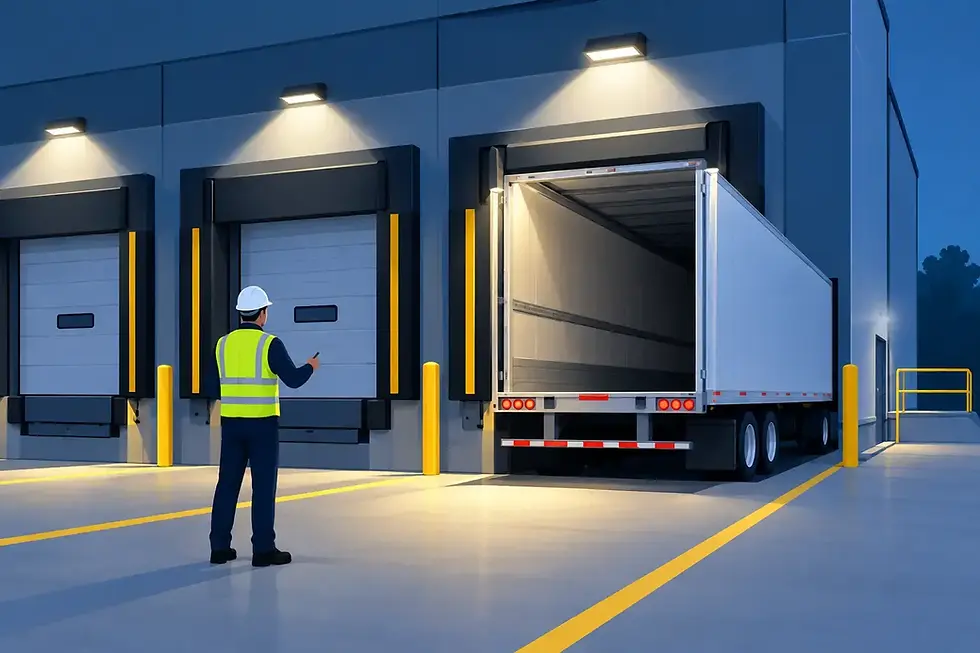
Dock work combines vehicle traffic, changing surfaces, edge hazards, and tight schedules. Trailer restraints, wheel chocks where appropriate, dock lights, communication procedures, and clear loading status indicators help keep forklifts out of unsafe trailers. Dock bumpers, guards, and other protective equipment can reduce property damage, but the loading process must also confirm that the trailer is present, secured, and safe to enter.
6. Forklift hits stored inventory during load handling
A raised load contacts overhead product, sprinkler lines, mezzanine structures, or another pallet. The initial impact may cause a secondary event, such as falling inventory, broken product, or a shifted load that becomes unstable during travel.
These events are more likely when operators work in poorly organized staging zones or when load dimensions vary from one shipment to the next. Confirm clearance requirements, maintain appropriate stacking practices, and avoid using forklift travel lanes as overflow storage. When unusual or oversized loads are routine, operators need a defined handling plan instead of improvising at the point of movement.
Why These Collisions Keep Happening
Most forklift incidents do not have a single cause. They develop when several normal conditions line up: a busy shift change, a blind corner, uneven housekeeping, a temporary staging area, a new employee, or an operator who is trying to recover lost time.
Visibility is a major factor. Operators must account for mast components, load height, rack ends, pedestrians wearing similar colors to the facility, and glare from dock doors. Traveling in reverse may improve forward visibility when carrying a load, but reverse travel introduces its own hazards. The correct practice depends on the load, grade, route, and surrounding activity.
Speed also changes the outcome. A speed that feels acceptable in an open aisle can be unsafe near pedestrian crossings, doors, battery charging areas, or dock approaches. Facility speed rules should reflect the specific zone, not just a single building-wide limit.
Build Controls Around the Actual Travel Path
Collision prevention works best when controls match how work is truly performed, including peak periods and temporary workflows. Start by walking the facility during active operations. Watch where pedestrians cross, where operators must turn sharply, where product accumulates, and where drivers lose sight of traffic.
Then address the most exposed areas with practical layers of control. Physical separation is usually stronger than a sign. Guardrails, bollards, rack protection, pedestrian barriers, and designated walkways can keep people and equipment apart even when attention slips. Visual controls such as floor markings, mirrors, signs, and warning lights make movement easier to anticipate. Equipment-based controls, including pedestrian safety lights and camera systems, support operator awareness when sightlines are limited.
Training remains necessary, but it should be specific. Rather than only reviewing general forklift rules, use real forklift collision examples from the facility. Discuss the exact blind intersections, dock procedures, pedestrian crossing expectations, and reporting steps employees encounter on shift. Provide training in the language workers understand, and reinforce it with supervisors who apply the same rules during production pressure.
Respond to Near Misses Before They Become Injury Events
A near miss is useful data. A pedestrian stepping back at the last moment, a rack protector receiving a fresh scrape, or a horn heard too late at an intersection can reveal a weak control before someone gets hurt.
Make reporting simple and non-punitive. The goal is to identify a hazardous condition, not automatically assign blame. Review the location, time, direction of travel, load condition, lighting, and contributing workflow. A recurring near miss at one crossing may justify a mirror or warning light. Repeated impacts at one rack end may indicate a need for protection, better aisle discipline, or a different storage layout.
The most effective forklift safety improvements are often visible at the point of risk. When a worker can clearly see where to walk, an operator can identify a crossing before entering it, and a dock crew can confirm trailer status, safe behavior becomes easier to repeat. Start with the collision exposure that occurs most often in your operation, then build the controls that make the safer choice the practical choice on every shift.


Comments