


What Causes Pallet Damage in Warehouses?

A pallet with one cracked deck board can turn a routine lift into a dropped-load event. It can also damage product, jam a conveyor, destabilize a rack location, or put an operator and nearby pedestrians in the path of shifting material. Understanding what causes pallet damage gives warehouse and safety leaders a practical way to reduce these failures before they interrupt throughput.
Pallet damage is rarely caused by one dramatic incident alone. More often, it builds through repeated forklift contact, overloaded shipments, poor storage conditions, and weak inspection practices. The right controls depend on pallet material, load type, travel distance, and equipment in use, but the underlying risks are consistent across most facilities.
What Causes Pallet Damage During Forklift Handling?
Forklift contact is one of the most common causes of pallet damage. Fork tines can split boards, puncture stringers, break blocks, and push loose material through the opposite side of a load. This often happens when an operator enters a pallet too quickly, uses forks that are not level, or fails to set fork spacing for the pallet opening.
A fork that is too narrow concentrates force on a small area. A fork that is too wide may strike the pallet structure or interfere with the load. Long forks create a separate risk when they extend beyond the far side of the pallet and contact another pallet, rack upright, wall, or product.
The damage may occur before the lift even begins. Dragging a pallet across the floor, pushing it sideways with a fork, or using one pallet to shove another can loosen fasteners and crack boards. Repeated short-distance repositioning is especially hard on wood pallets because each contact adds stress at the entry points.
Operator visibility also matters. When a load blocks the forward view, operators may misjudge fork height, pallet alignment, and clearance at rack beams or dock doors. Travel in reverse when appropriate, correctly adjusted mirrors, adequate aisle lighting, and clear traffic routes all help reduce unintended impacts.
Overloading and Poor Load Distribution
A pallet is not simply a platform. It is a load-bearing structure designed to distribute weight through specific boards, stringers, blocks, and fasteners. When weight exceeds its rated capacity or is concentrated in one area, the pallet can fail even if no forklift touches it.
A dense load placed in the center can bow deck boards and weaken the supporting structure. Heavy product positioned along one edge makes the load more likely to tip and puts uneven stress on the pallet during lifting. Point loads from machinery feet, drums, and narrow product bases can crush individual boards or blocks.
Dynamic loads deserve special attention. A pallet that holds a given weight while sitting on the floor may not safely support that same weight while being lifted, moved over uneven concrete, placed in a rack, or transported by truck. Rack storage creates another condition: if the pallet is supported only at its edges, insufficient deck strength can lead to deflection or collapse.
Load configuration affects pallet life as much as total weight. Cases should be stacked squarely, with weight distributed across the deck. Stretch wrap, strapping, corner boards, and load containment help keep product from shifting, but they cannot compensate for a pallet that is structurally inadequate for the job.
Impacts From Racks, Docks, and Material Handling Equipment
Aisles, rack systems, dock areas, conveyors, and trailers all create opportunities for pallet damage. Operators working under time pressure may strike pallet corners against rack beams, clip a pallet while turning, or force a load into a tight storage location. Even a minor impact can open a crack that becomes a larger failure during the next lift.
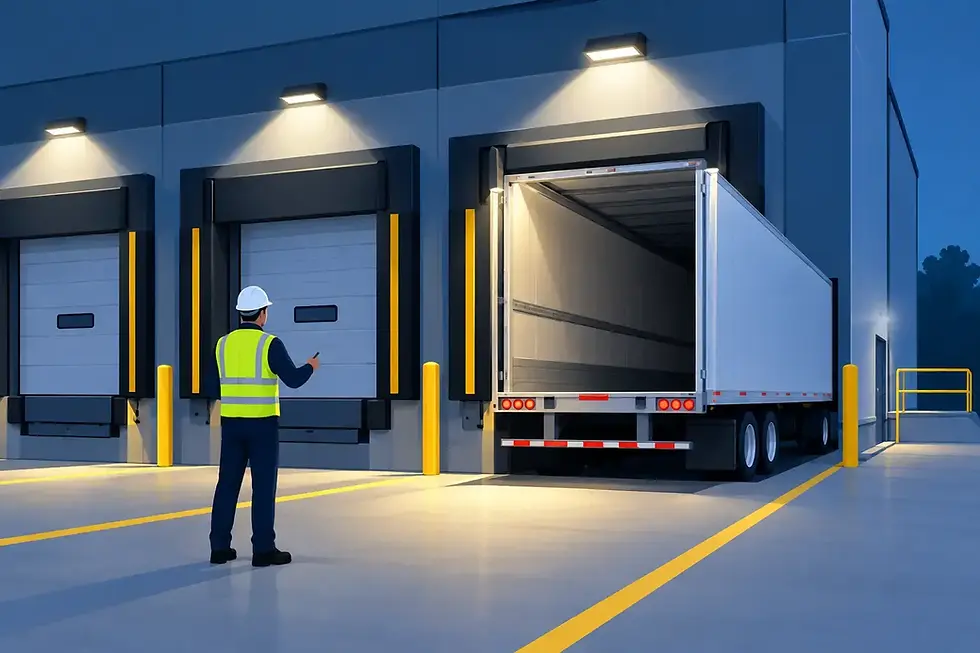
At the dock, uneven trailer floors, gaps between the dock and trailer, and poorly positioned dock plates can shock-load pallets. A pallet may catch on a damaged floorboard, transition abruptly over a dock leveler, or strike a trailer wall during placement. Dock safety procedures should account for both vehicle movement and the condition of the transfer path.
Conveyors can be equally demanding. Misaligned transfers, abrupt stops, and unsupported pallet spans place stress on bottom boards and blocks. A pallet suitable for forklift movement is not automatically suitable for conveyor use. Facilities should match pallet design to the equipment it will encounter instead of treating every pallet as interchangeable.
Moisture, Temperature, and Contamination
Wood pallets absorb moisture. Exposure to rain, wet dock areas, spills, outdoor storage, or washdown zones can swell boards, loosen nails, encourage mold, and reduce structural consistency. As pallets dry, they may warp, split, or develop raised fasteners. The result is a pallet that no longer sits flat or enters a rack and forklift cleanly.
Plastic pallets resist moisture but have different limits. Cold temperatures can make some plastics more brittle, while heat and prolonged sun exposure can contribute to warping or degradation. Chemical exposure may also weaken plastic or affect its surface, depending on the resin and the chemicals involved.
Contamination creates handling problems even when the pallet remains intact. Oil, grease, ice, loose shrink wrap, and product residue can reduce traction between the load and pallet. Debris caught in pallet openings can interfere with fork entry. In food, pharmaceutical, and clean manufacturing operations, contamination may also require pallets to be removed from service for sanitary reasons.
Store pallets in a dry, controlled area whenever possible. Keep them off standing water, away from active vehicle paths, and protected from weather. Outdoor staging may be unavoidable, but it should be limited to pallet types designed for those conditions.
Weak, Mismatched, or Poorly Repaired Pallets
Not every pallet failure begins in your facility. Incoming pallets may already have hidden cracks, missing fasteners, crushed blocks, or weakened stringers. Mixed pallet pools can also introduce different dimensions, entry styles, capacities, and repair quality into the same workflow.
A repaired pallet can be appropriate when the repair meets the pallet's intended use. However, repairs that add weak boards, poorly driven nails, or components with incompatible dimensions may create a hazard rather than extend useful life. A pallet that looks acceptable from the top may have damaged bottom boards that make it unsafe for racking or conveyor travel.
Selecting the right pallet is an operational control. Wood, plastic, metal, and composite pallets each involve trade-offs in cost, repairability, sanitation, durability, weight, and compatibility with automated systems. A lower-cost pallet may be suitable for a one-way shipment but inadequate for a closed-loop operation with high rack storage, repeated forklift handling, and long service life.
Housekeeping and Workflow Pressures
Pallet damage increases when the work area is congested. Broken pallets left in aisles become impact hazards. Loose boards and nails can damage forklift tires, catch on loads, and create slip or puncture risks. Empty pallets stacked too high or unevenly can fall when removed from the stack.
Workflow pressure is another factor. When operators must move product through narrow aisles, work around pedestrians, or rush trailers at the end of a shift, careful fork positioning can give way to shortcuts. That is not only an operator issue. It is often a process design issue involving slotting, staging space, travel routes, dock scheduling, and staffing.
Clear pallet-only staging areas, defined travel lanes, adequate turning space, and protection around rack ends and dock equipment reduce the number of impacts workers must avoid. Forklift pedestrian safety controls can also improve route discipline in shared traffic areas, helping operators maintain attention on their loads and surroundings.
Build a Pallet Damage Prevention Routine
A practical prevention program starts with a clear decision: inspect, repair, repurpose, or remove from service. Operators should check pallets before lifting and during load transfer, not only after a visible failure. Look for split or broken boards, missing blocks, exposed nails, loose fasteners, excessive warping, contamination, and damage at fork-entry points.
For consistent results, establish a simple standard for each pallet application. Define acceptable pallet types, maximum load weight, rack requirements, conveyor compatibility, outdoor-use limits, and removal criteria. Train operators on fork spacing, level entry, load centering, rack placement, and the rule against pushing or dragging pallets with forks.
Maintenance teams should investigate recurring damage by location and shift. If one dock door produces broken bottom boards, inspect the leveler, trailer condition, and transition. If a rack aisle produces cracked corners, review clearance, turning patterns, lighting, and rack protection. The point is not to assign blame. It is to remove the repeated contact or condition that keeps damaging pallets.
Pallets are a low-cost component until they fail under a high-value load. Treating pallet condition as part of forklift safety protects inventory, equipment, rack systems, and the people working around them. The next damaged pallet is useful evidence: isolate it, identify where the damage likely occurred, and correct that part of the process before the same failure reaches a loaded lift.


Comments