


Essential Forklift Battery PPE for Safe Handling

Handling forklift batteries requires strict adherence to safety protocols. These batteries contain hazardous materials and pose risks such as acid spills, electrical shocks, and heavy lifting injuries. Using the right personal protective equipment (PPE) is critical to protect workers and maintain a safe workplace. This article outlines the essential forklift battery ppe needed for safe battery handling, with practical advice on selection and use.
Understanding the Importance of Forklift Battery PPE
Forklift batteries are typically large lead-acid units filled with sulfuric acid. When handling or maintaining these batteries, workers face several hazards:
Chemical burns from acid spills or splashes
Electrical shocks from battery terminals
Heavy lifting injuries due to battery weight
Eye injuries from acid mist or splashes
Proper PPE minimizes these risks. It acts as a barrier between the worker and hazardous substances or conditions. Without it, even routine battery maintenance can lead to serious injuries.
Using the correct forklift battery ppe is not optional. It is a mandatory safety measure that protects workers and reduces downtime caused by accidents. Businesses must ensure that all personnel involved in battery handling are equipped with and trained to use the appropriate PPE.
Key Components of Forklift Battery PPE
Selecting the right PPE involves understanding the specific hazards and matching equipment to those risks. The essential PPE for forklift battery handling includes:
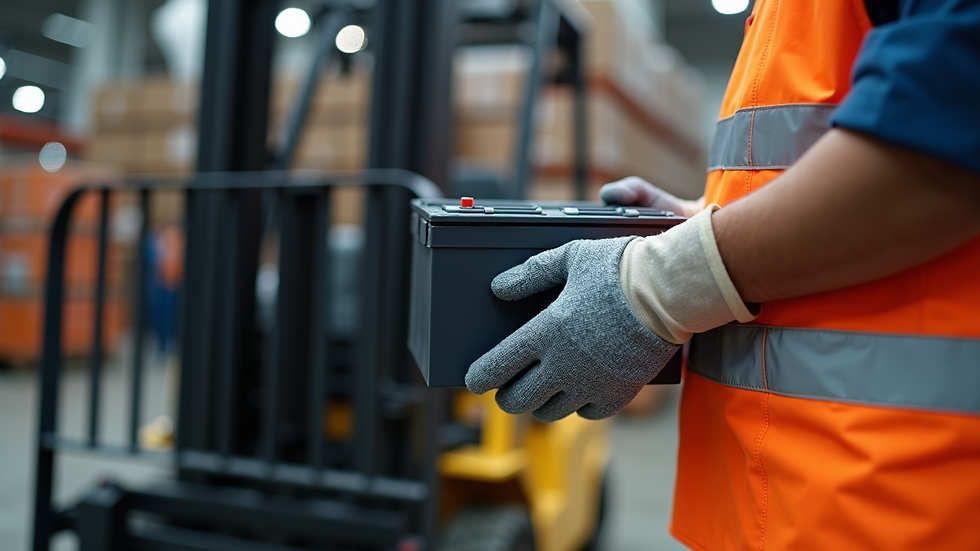
1. Acid-Resistant Gloves
Gloves must resist sulfuric acid and other corrosive substances. Look for gloves made from materials such as:
Neoprene
Nitrile
Butyl rubber
These materials provide chemical resistance and durability. Gloves should fit snugly but allow dexterity for handling battery connectors and tools.
2. Safety Goggles or Face Shields
Eye protection is critical. Goggles or face shields prevent acid splashes from reaching the eyes. Choose equipment that:
Provides a tight seal around the eyes
Is impact-resistant
Offers anti-fog properties for clear vision
Face shields can be used in combination with goggles for extra protection during battery charging or cleaning.
3. Acid-Resistant Aprons and Clothing
Wear acid-resistant aprons or coveralls to protect the torso and legs from spills. Materials like PVC or rubber-coated fabrics are effective barriers. Clothing should cover all exposed skin and be easy to clean or replace.
4. Respiratory Protection
In some cases, battery charging can release hydrogen gas or acid mist. Use respirators or masks with appropriate filters if ventilation is inadequate. This protects the respiratory system from harmful fumes.
5. Safety Footwear
Steel-toed boots with acid-resistant soles protect feet from heavy battery drops and acid spills. Ensure footwear is slip-resistant to prevent falls in wet or contaminated areas.
6. Hearing Protection (If Applicable)
Battery charging rooms may have noisy equipment. Use earplugs or earmuffs to protect hearing when noise levels exceed safe limits.
Proper Use and Maintenance of Forklift Battery PPE
Having the right PPE is only part of the safety equation. Proper use and maintenance are equally important.
Inspect PPE before each use. Check gloves for holes or cracks, goggles for scratches, and aprons for tears.
Clean PPE after use. Remove acid residues with water and mild detergent. Dry thoroughly before storage.
Store PPE properly. Keep equipment in a clean, dry area away from direct sunlight or chemicals.
Replace damaged or worn PPE immediately. Do not attempt to repair gloves or aprons that have been compromised.
Train workers on correct PPE use. Demonstrate how to put on, remove, and dispose of PPE safely.
Following these steps ensures PPE remains effective and extends its service life.

Training and Safety Procedures for Battery Handling
PPE alone cannot guarantee safety. Comprehensive training and clear procedures are essential.
Educate workers on battery hazards. Explain risks such as acid burns, electrical shock, and heavy lifting injuries.
Demonstrate correct PPE use. Show how to wear and remove gloves, goggles, and aprons without contamination.
Establish emergency protocols. Include steps for acid spill cleanup, eye wash station use, and first aid.
Implement safe battery handling techniques. Use mechanical aids for lifting and avoid manual handling when possible.
Regularly review and update safety policies. Adapt to new equipment, regulations, or incident reports.
Training builds confidence and competence, reducing the likelihood of accidents.
Enhancing Workplace Safety with Forklift Battery PPE
Integrating PPE into a broader safety program improves overall workplace safety. Consider these additional measures:
Install proper ventilation systems in battery charging areas to reduce fumes.
Use spill containment trays to catch acid leaks.
Label battery storage and charging zones clearly.
Schedule regular equipment inspections to identify hazards early.
Encourage reporting of unsafe conditions without fear of reprisal.
Combining PPE with these controls creates a safer environment and supports compliance with occupational health and safety standards.
Looking to purchase Battery PPE for your warehouse check here: forklift battery handling ppe.
Final Thoughts on Forklift Battery PPE
Investing in the right forklift battery ppe is a practical step toward reducing workplace injuries and improving operational efficiency. Proper gloves, eye protection, clothing, and footwear form the foundation of safe battery handling. Coupled with training and safety procedures, PPE helps prevent accidents and protects workers from serious harm.
Prioritize PPE selection, maintenance, and worker education to create a safer work environment. This approach aligns with the goal of becoming a leader in forklift safety innovations and supports businesses in maintaining compliance and reducing downtime.
Safety is a continuous process. Regularly review PPE standards and update practices to keep pace with evolving risks and technologies. This commitment ensures that forklift battery handling remains a controlled and safe task.


Comments